

The Akharas of Kumbh Mela: Guardians of India's Ancient Spiritual Tradition
When people think of the Kumbh Mela, they often picture millions of devotees taking a holy dip in the sacred river. Yet, beyond the vast crowds and spiritual rituals lies a centuries-old institution that forms the very soul of the festival—the Akharas.
These are not merely religious groups or organizations. They are living institutions that have preserved India's spiritual wisdom, monastic traditions, and cultural heritage for centuries. During the Kumbh Mela, the grand arrival of the Akharas transforms the festival into a magnificent spectacle of devotion, discipline, and tradition. To truly understand the Kumbh Mela, one must first understand the Akharas.
The Origin of the Akharas
The history of the Akharas stretches back many centuries. While the tradition of asceticism in India is ancient, the organized Akhara system is widely associated with Adi Shankaracharya, the great philosopher and spiritual reformer who played a vital role in strengthening Sanatan Dharma.

During a period of political and social uncertainty, ascetics were organized into disciplined monastic orders to preserve spiritual knowledge, protect sacred pilgrimage sites, and safeguard religious traditions. Over time, these institutions evolved into the Akharas that continue to guide millions of devotees today. More than monasteries, the Akharas became centers of learning, meditation, philosophy, and service to society.
What Does the Word "Akhara" Mean?
Traditionally, the word Akhara refers to a place of discipline, training, and spiritual practice. Within the context of the Kumbh Mela, an Akhara represents an organized community of saints and ascetics who follow a common spiritual lineage, philosophy, and way of life.
Each Akhara has its own history, traditions, rituals, leadership, and distinctive identity. Despite their differences, all Akharas are united by their commitment to preserving India's spiritual heritage and guiding seekers on the path of self-realization.
The Different Types of Akharas
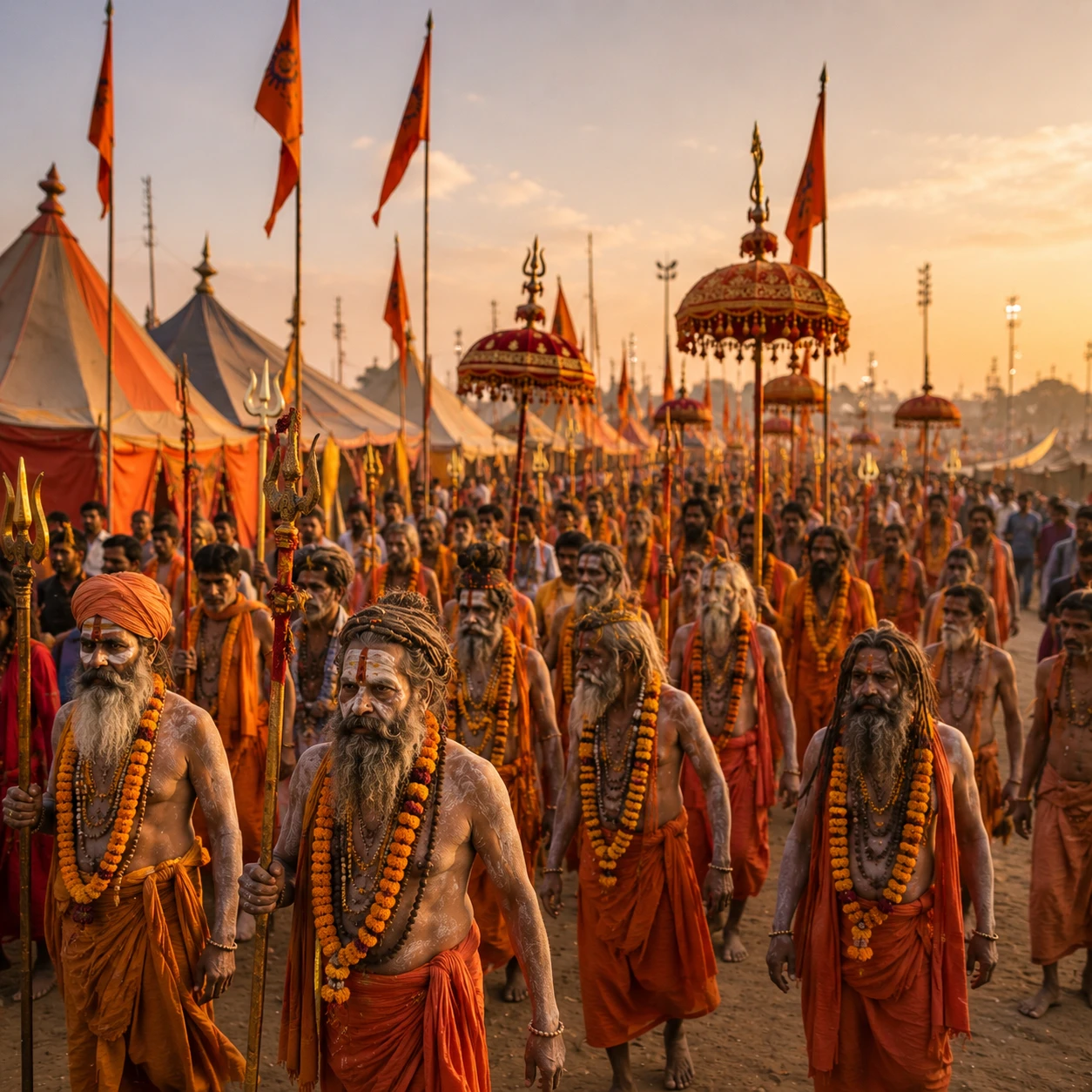
The Akharas are broadly divided into three spiritual traditions. The Shaiva Akharas are dedicated to Lord Shiva and include many of the renowned Naga Sadhus. Their ash-covered appearance, austere lifestyle, and deep spiritual discipline make them among the most recognizable figures of the Kumbh Mela.
The Vaishnava Akharas follow the teachings of Lord Vishnu and emphasize devotion, service, and the path of Bhakti. Their traditions are rooted in compassion, humility, and devotional worship. The Udaseen and Sikh-related Akharas represent distinct spiritual philosophies that combine meditation, renunciation, and selfless service while preserving their own unique customs.Together, these diverse traditions reflect the remarkable inclusiveness of Sanatan Dharma.
The Magnificent Procession of the Akharas
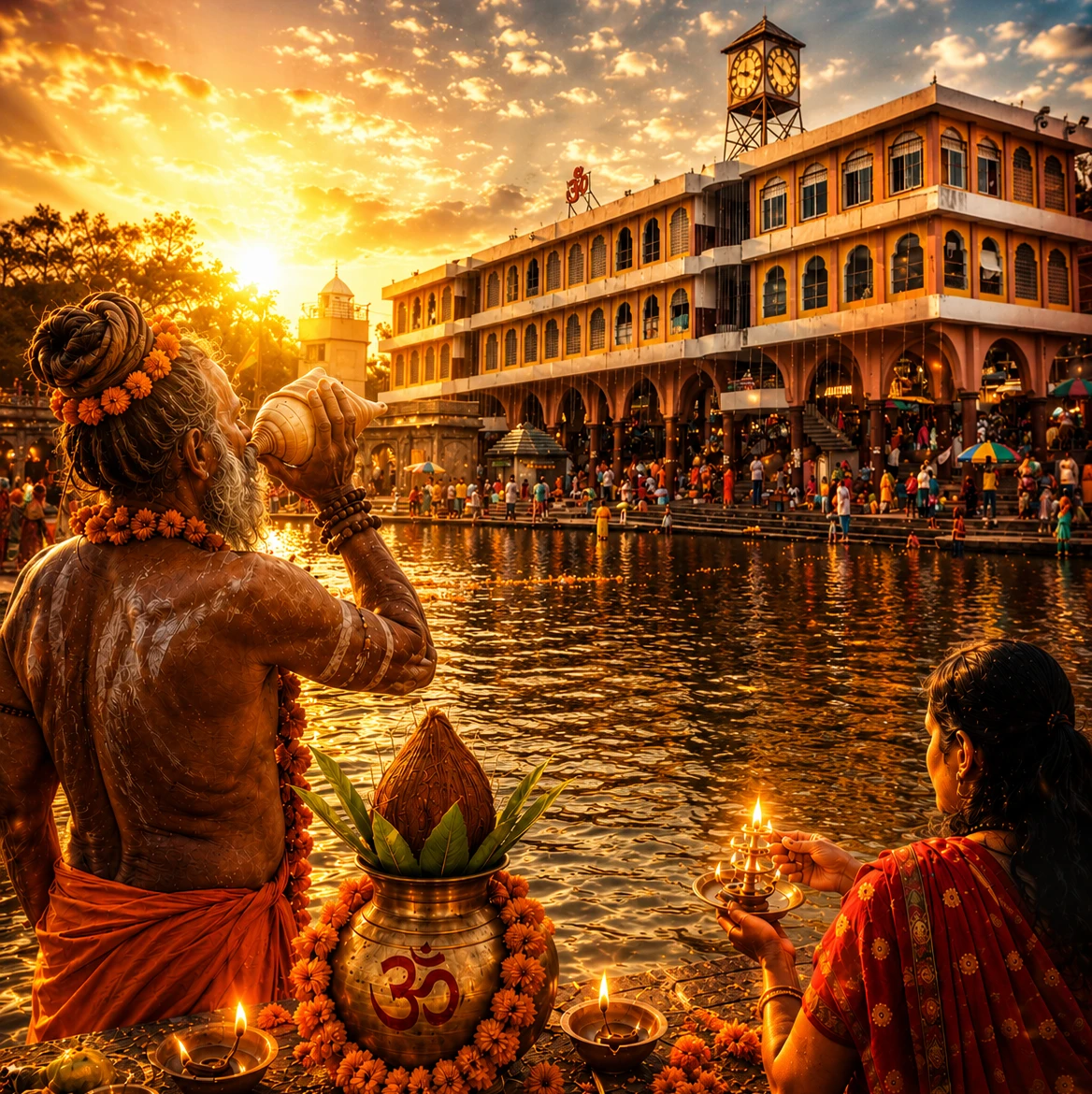
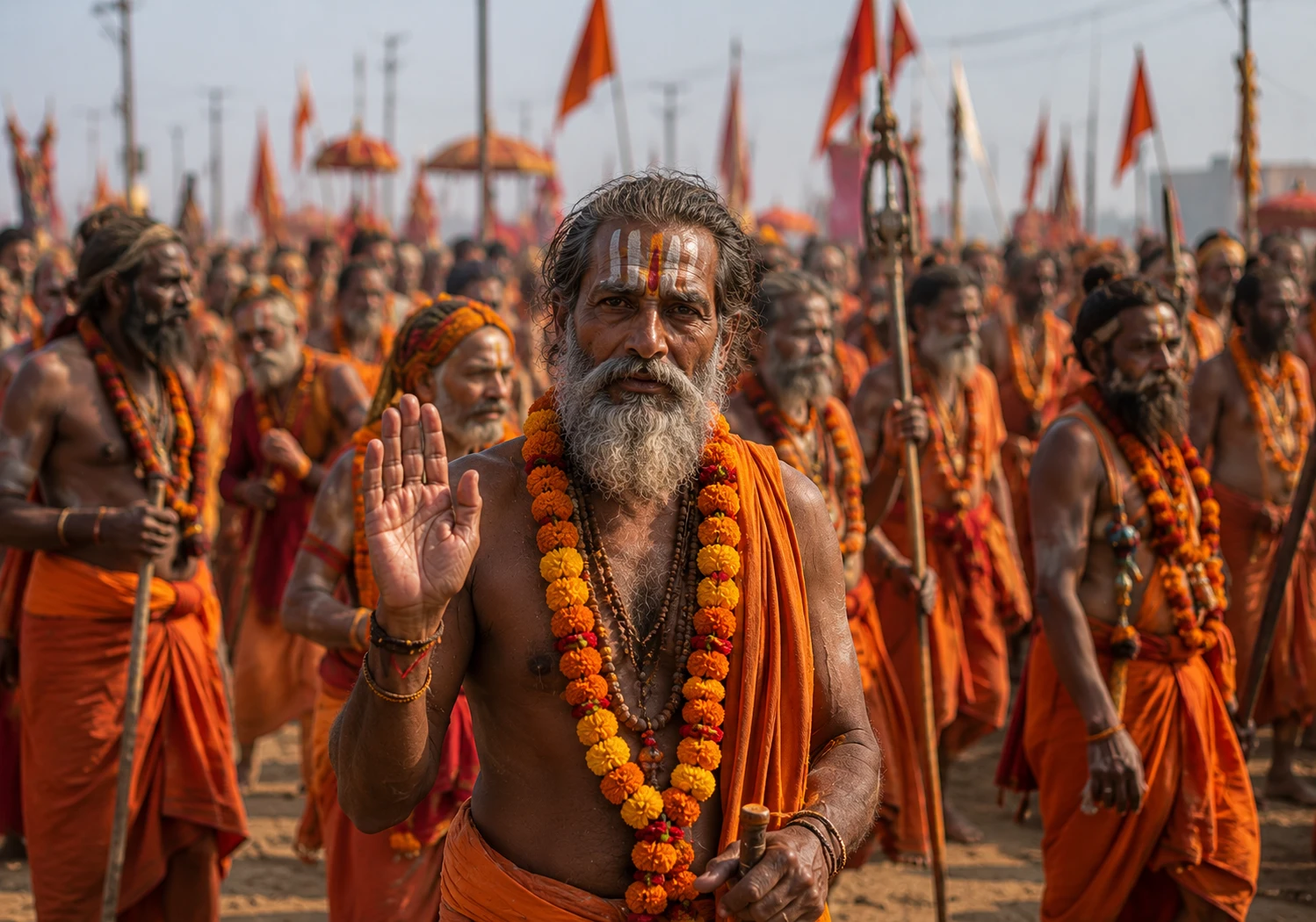
Perhaps the most anticipated moment of every Kumbh Mela is the Shahi Snan, when the Akharas lead grand ceremonial processions toward the sacred river. Long before sunrise, the atmosphere comes alive with the sounds of conch shells, drums, devotional chants, and temple bells. Colorful flags flutter above beautifully decorated chariots as saints and Mahamandaleshwars proceed with dignity and devotion.
Leading many of these processions are the Naga Sadhus, whose fearless appearance and disciplined spiritual life have fascinated pilgrims for generations. Although the procession appears grand and majestic, its true significance lies not in its spectacle but in its centuries-old spiritual symbolism and continuity.
More Than Ascetics
The saints of the Akharas dedicate their lives to spiritual practice, study, meditation, and service. Many spend years in isolation within forests, mountains, or monasteries before appearing during the Kumbh Mela. Others devote themselves to teaching sacred scriptures, preserving ancient traditions, guiding disciples, and supporting religious institutions across India. Their lives remind us that spirituality is not simply about rituals—it is about discipline, sacrifice, wisdom, and lifelong dedication.
The Role of Akharas in the Kumbh Mela
Without the Akharas, the Kumbh Mela would lose much of its spiritual identity. They oversee many of the religious ceremonies, participate in sacred rituals, guide pilgrims, preserve monastic traditions, and uphold customs that have survived for centuries. Their presence transforms the Kumbh from a large gathering into a living expression of India's spiritual civilization. For many pilgrims, witnessing the Akharas during the festival is one of the most meaningful experiences of their journey.
A Tradition That Continues to Inspire
In today's rapidly changing world, the Akharas stand as symbols of continuity. They preserve knowledge that has been passed from teacher to disciple across generations, ensuring that ancient philosophies remain relevant in modern times.
Their contribution extends beyond religion. Through education, spiritual guidance, charitable activities, and cultural preservation, the Akharas continue to shape India's spiritual landscape while inspiring people from around the world.
Witness the Legacy at Nashik Kumbh 2027
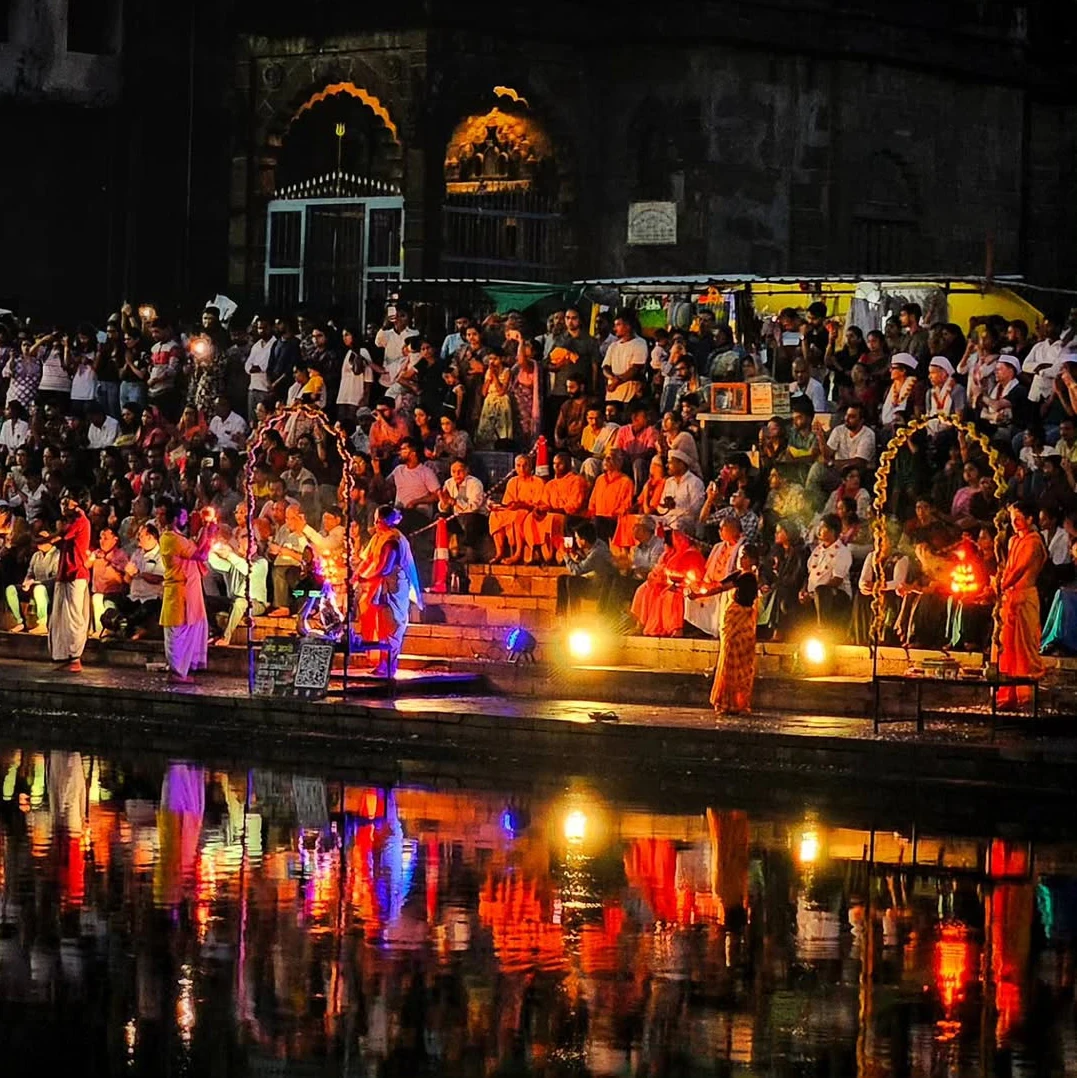
As Simhastha Kumbh 2027 approaches, the Akharas will once again gather in Nashik and Trimbakeshwar, continuing traditions that have endured for centuries. Their grand processions, sacred rituals, and timeless teachings will remind every visitor that the Kumbh Mela is far more than a festival. It is a living heritage where history, spirituality, discipline, and devotion come together in remarkable harmony.
Whether you are a pilgrim, a student of history, a photographer, or a curious traveler, witnessing the Akharas during Nashik Kumbh 2027 offers a rare opportunity to experience one of India's oldest and most enduring spiritual traditions—a legacy that continues to inspire the world.