

The History of Kumbh Mela: From Samudra Manthan to the Present Day
Some traditions are created by history. Others become history themselves. The Kumbh Mela belongs to the latter. Long before kingdoms rose and fell, before cities expanded and civilizations transformed, the Kumbh had already become a symbol of faith, devotion, and spiritual awakening. It is more than the world's largest religious gathering—it is a timeless tradition that has connected generations for thousands of years.
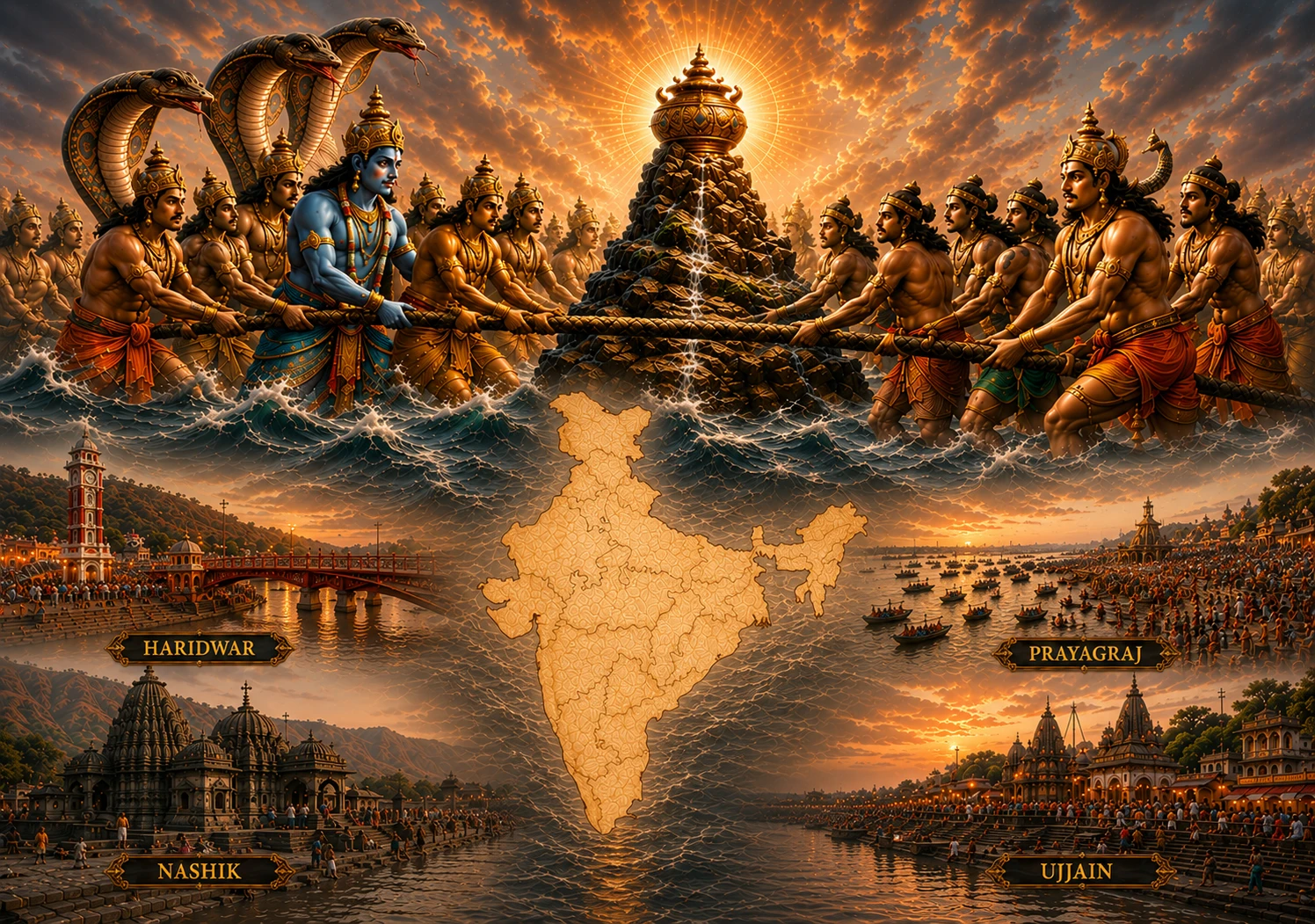
Every twelve years, millions of devotees journey to one of four sacred cities—Prayagraj, Haridwar, Ujjain, and Nashik—to take part in a festival whose origins lie deep within Hindu mythology and whose legacy continues to shape India's spiritual identity. To understand the Kumbh Mela is to travel through mythology, history, astronomy, and culture, discovering how an ancient belief evolved into one of humanity's most extraordinary living traditions.
Where the Story Begins
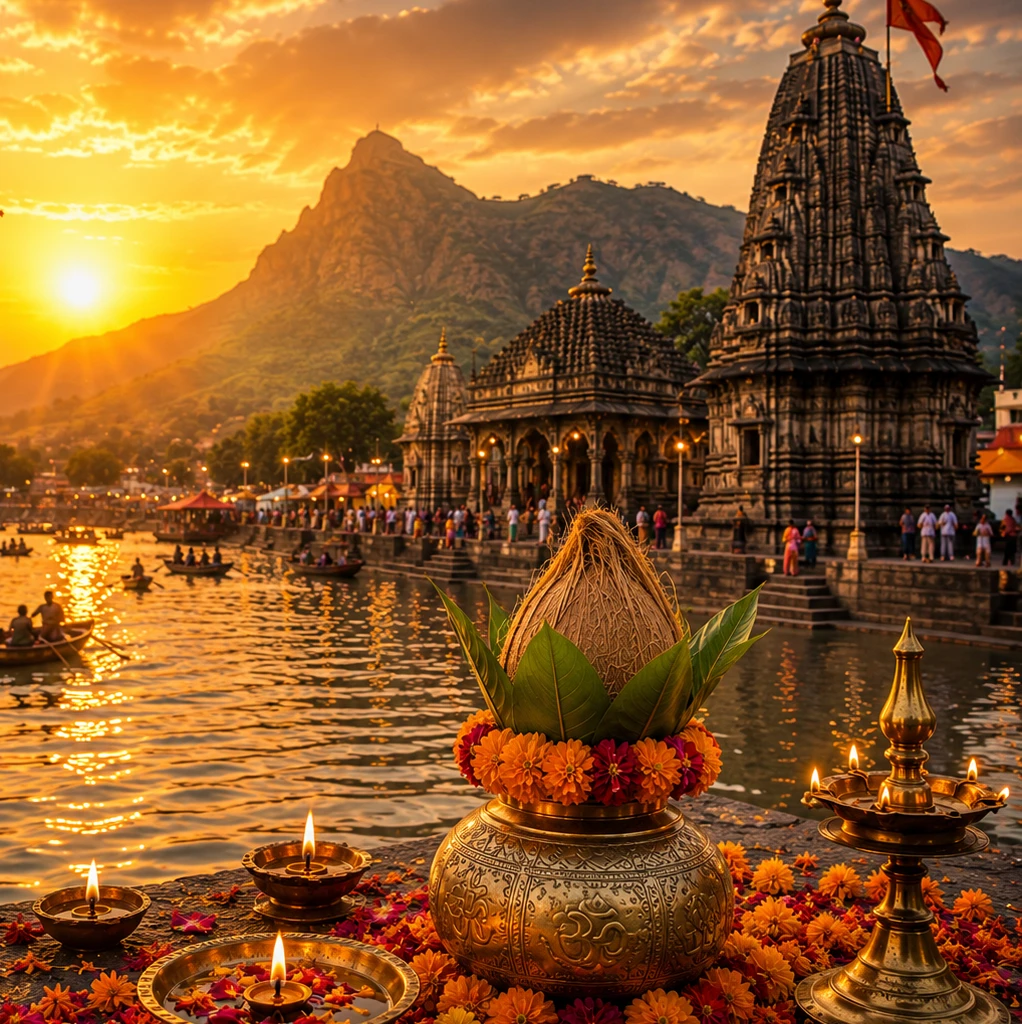
The origins of the Kumbh Mela are inseparable from one of the most celebrated legends in Hindu scriptures—the story of Samudra Manthan, the Churning of the Ocean of Milk. According to the Puranas, the Devas (gods) and Asuras (demons) joined forces to churn the cosmic ocean in search of Amrit, the nectar of immortality. Using Mount Mandara as the churning rod and the serpent Vasuki as the rope, they continued their divine effort until Lord Dhanvantari emerged carrying the sacred Kumbh (pot) filled with the nectar of eternal life.
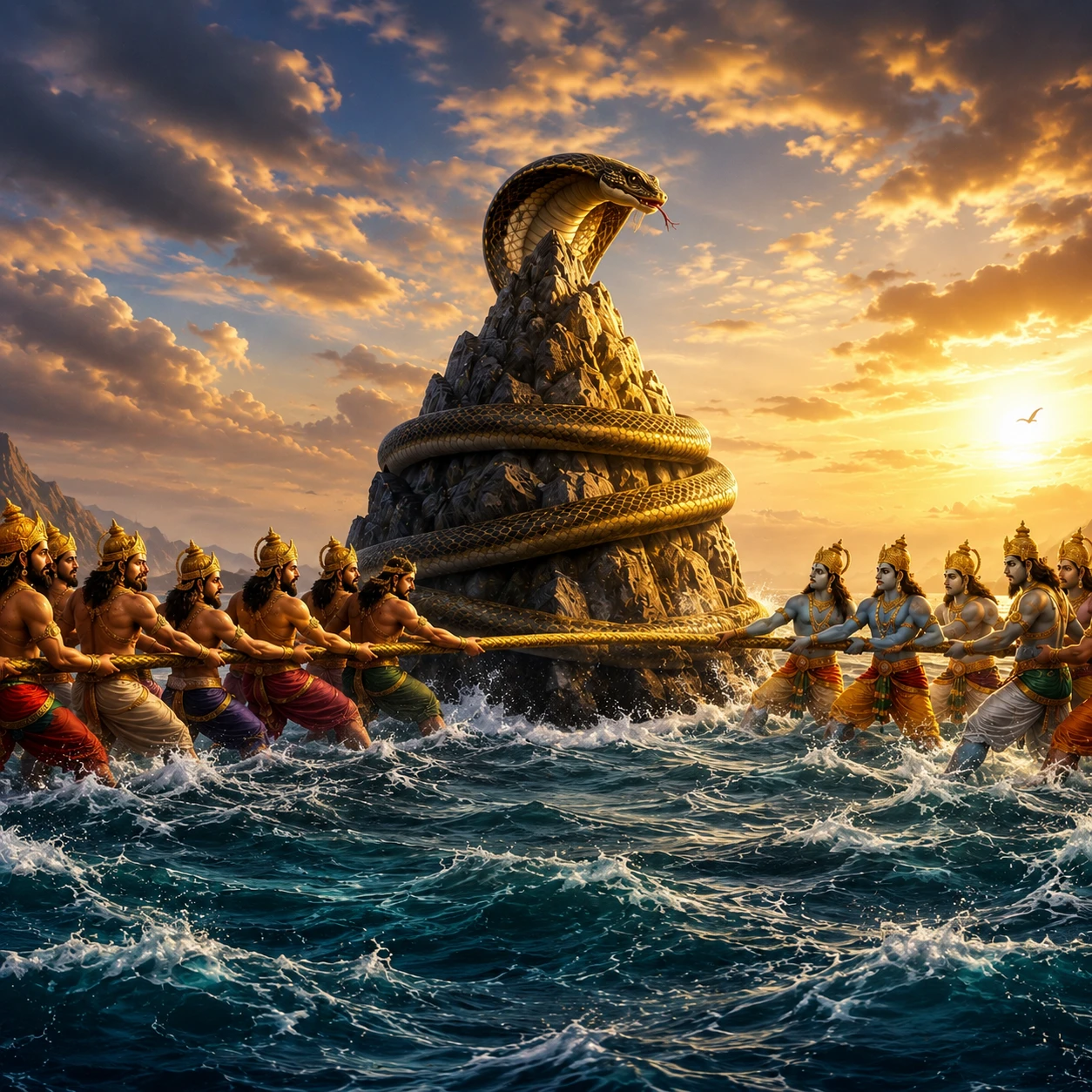
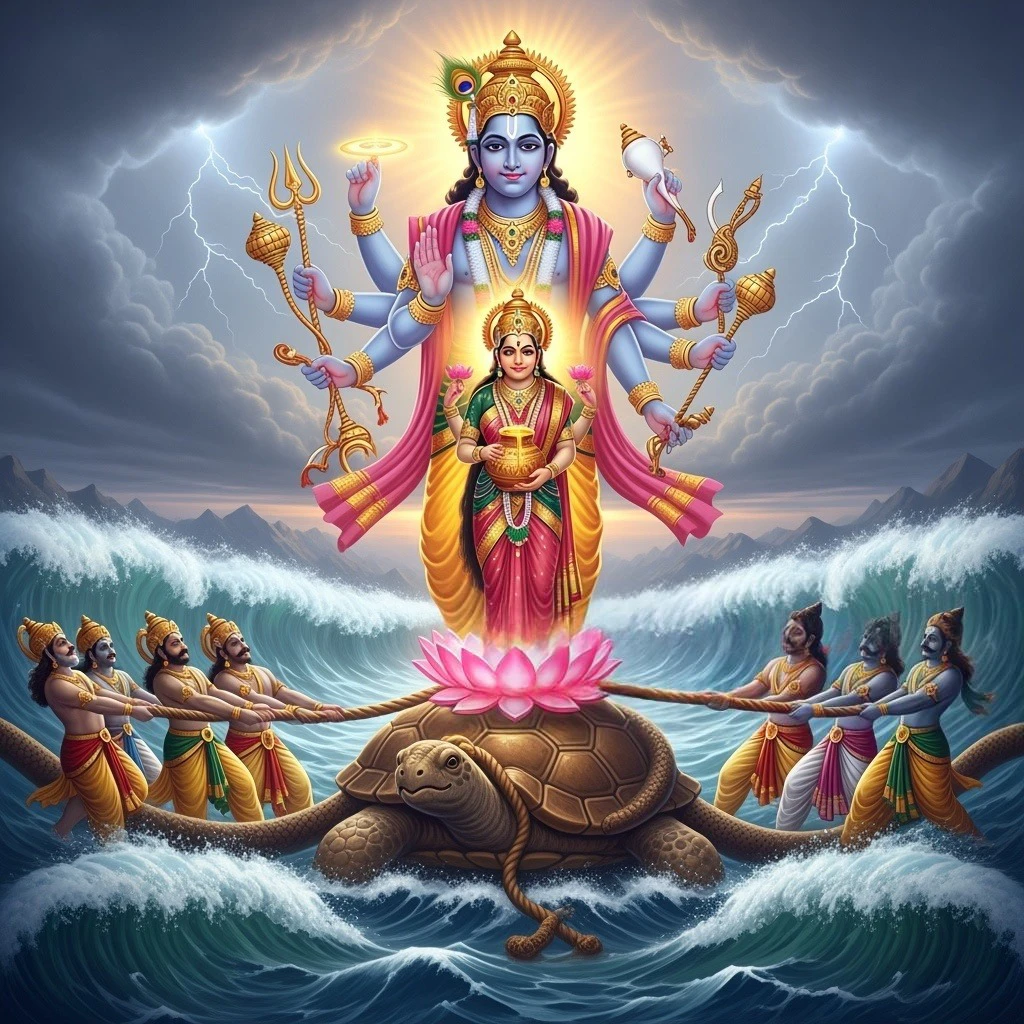
What followed was a celestial struggle unlike any other.
As the Devas and Asuras fought for possession of the Amrit, Lord Vishnu, in the enchanting form of Mohini, intervened to protect the divine nectar. During this cosmic pursuit, drops of Amrit are believed to have fallen upon four places on Earth—Prayagraj, Haridwar, Ujjain, and Nashik. These sacred locations became the eternal centres of the Kumbh Mela, transforming mythology into a living tradition that continues to inspire millions.
From Sacred Legend to Living Tradition
While the story of Samudra Manthan belongs to the spiritual traditions of Hinduism, the Kumbh Mela itself gradually evolved into a remarkable cultural and religious institution. Ancient sages, saints, scholars, and pilgrims began gathering periodically at these sacred riverbanks to perform rituals, exchange knowledge, discuss philosophy, and strengthen the spiritual foundations of society.
Over time, these gatherings became increasingly organised. Monastic orders established their presence, pilgrimage routes developed, and the festival grew into an event that united people across kingdoms, languages, and communities. Rather than remaining a symbolic legend, the Kumbh became a celebration that could be experienced by every generation.
The Role of Astronomy in the Kumbh Mela
Unlike festivals celebrated on fixed calendar dates, the Kumbh Mela follows an ancient astronomical tradition. Its timing is determined by the positions of Jupiter, the Sun, and the Moon, whose celestial alignments are considered highly auspicious in Hindu astrology.
For Nashik, the festival is celebrated when Jupiter enters the zodiac sign Leo (Simha), giving rise to the name Simhastha Kumbh. This remarkable combination of mythology and astronomy makes the Kumbh unique among the world's great religious gatherings. It reflects an ancient understanding of the relationship between cosmic events and spiritual practice that has been preserved for centuries.
A Festival That Grew With Civilization
As India's civilization flourished, so did the Kumbh Mela. Kings, scholars, saints, and ordinary pilgrims travelled vast distances to participate in the sacred gathering. Temples were built, monasteries expanded, and the festival became a meeting point for different schools of philosophy and spiritual traditions.
It was never merely a religious occasion. The Kumbh also served as a platform for intellectual discussions, cultural exchange, social service, and the preservation of India's vast spiritual knowledge. Even today, many ancient customs observed during the Kumbh have remained remarkably unchanged, demonstrating the continuity of one of the world's oldest living traditions.
The Living Heritage of India
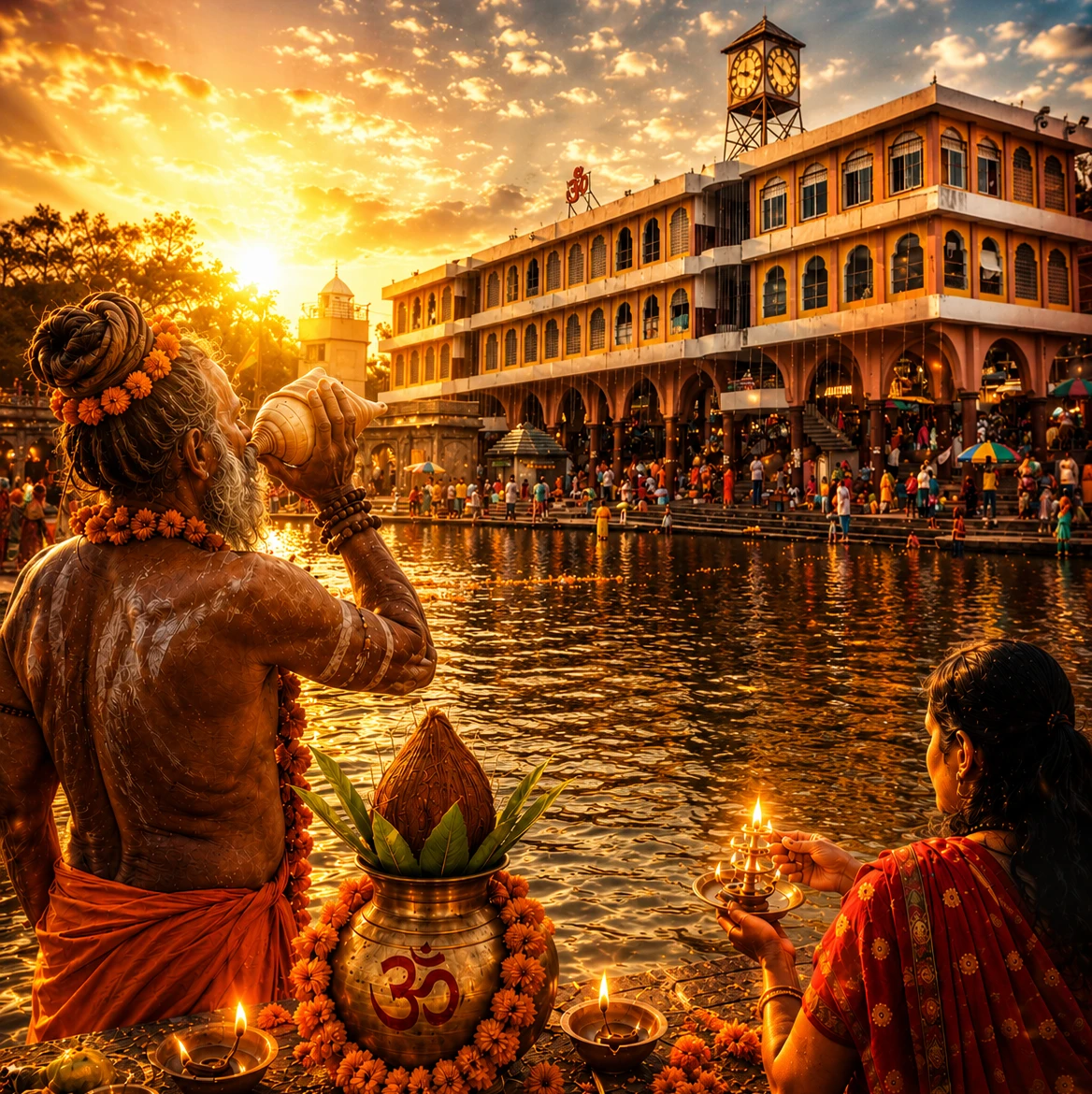
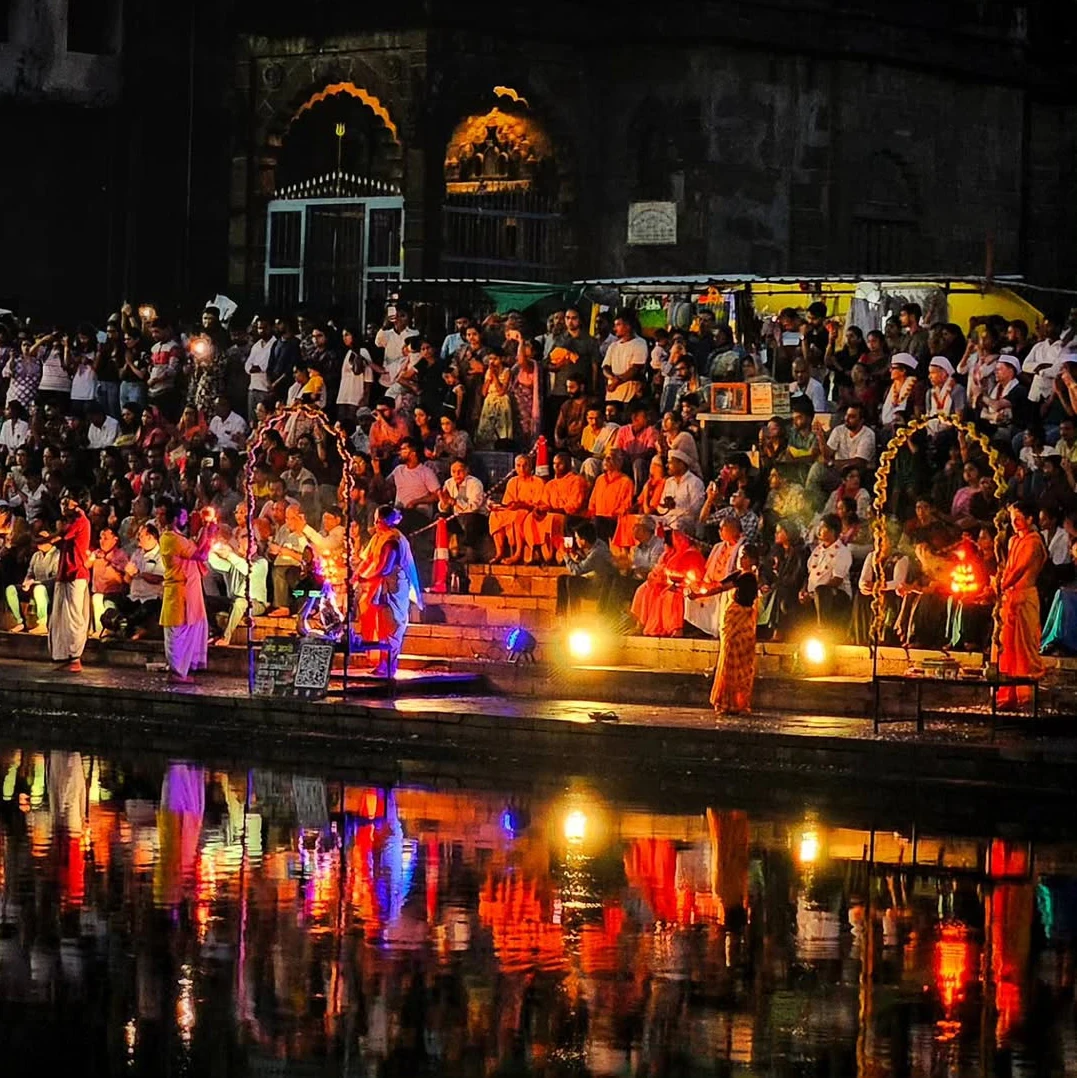
Walking through the Kumbh Mela today is like stepping into a living chapter of Indian civilization. The majestic processions of the Akharas, the arrival of the Naga Sadhus, the chanting of Vedic hymns, the sacred rituals performed along the riverbanks, and the devotion of millions of pilgrims together create an atmosphere that cannot be recreated anywhere else.
Unlike monuments that preserve history in stone, the Kumbh preserves history through people. Its traditions continue because every generation chooses to carry them forward. This continuity is what makes the festival not only historically significant but culturally invaluable.
Nashik's Place in This Timeless Journey
Among the four sacred Kumbh cities, Nashik occupies a distinctive place. The sacred Godavari River, revered as the Ganga of the South, flows through the heart of the city, while nearby Trimbakeshwar houses one of the twelve Jyotirlingas of Lord Shiva and the revered source of the Godavari.
Combined with its deep connections to the Ramayana, Nashik offers pilgrims a spiritual landscape where mythology, history, and devotion naturally converge. For centuries, saints and devotees have considered Nashik not only a destination for pilgrimage but a place for reflection, transformation, and spiritual renewal.
The Kumbh in the Modern World
Today, the Kumbh Mela attracts millions of pilgrims, researchers, photographers, journalists, and travellers from across the globe. Advances in infrastructure and technology have made the festival more accessible than ever, yet its spiritual essence remains unchanged.
People continue to gather for the same reasons that inspired their ancestors centuries ago—to seek blessings, purification, wisdom, and inner peace. In an age of rapid change, the Kumbh stands as a powerful reminder that some traditions grow stronger not by resisting time, but by remaining true to their purpose.
A Legacy That Continues
The history of the Kumbh Mela is not confined to ancient scriptures or historical records. It continues to unfold with every pilgrimage, every sacred bath, every prayer offered along the riverbanks, and every generation that chooses to preserve its traditions. As Nashik prepares for Simhastha Kumbh 2027, another chapter is about to be written in this extraordinary story.
It is a story that began with a divine legend, flourished through centuries of faith, and continues today as one of humanity's greatest spiritual and cultural celebrations. The Kumbh Mela is more than history. It is a living heritage—one that continues to inspire the world, one pilgrimage at a time.